|
Plumbing Inspection
Plumbing may be defined as practice, materials, and fixtures used in the installation, maintenance, and alteration of all piping, fixtures, appliances, and appurtenances in connection with sanitary and the venting system, and the public or private water supply systems. A plumbing system consists of three separate parts: an adequate potable water supply system, a safe, adequate drainage system and ample fixtures and equipment.
Main Features of an Indoor Plumbing System
The primary functions of the plumbing system within the house are as follows:
- To bring an adequate and potable supply of water to the users of the dwelling.
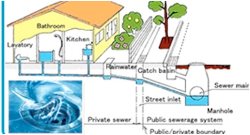
- To drain all waste water and sewage discharged from these fixtures into the public sewer, or private disposal system.
Elements of a Plumbing System Inspection
Water Service:
The piping of a house service line should be as short as possible with as few elbows and bends as possible since these reduce the pressure and therefore the supply of water to fixtures in the house. The house service line should also be protected from freezing. The burying of the line under soil is a commonly accepted depth to prevent freezing. This depth varies, however, across the country from north to south. The local or state plumbing code should be consulted for the recommended depth in your area.
The materials used for a house service may be copper, cast iron, steel pex.pvc or wrought iron. The connections used should be compatible with the type of pipe used.
Hot and Cold Water Main Lines:
The hot and cold water main lines are attached to the water meter and hot-water tank on one side and the fixture supply risers on the other. These pipes should be installed in a neat manner and should be supported by pipe hangers or straps of sufficient strength and number to prevent sagging.
Hot Water Heaters:
Hot water heaters are usually powered by electricity, fuel oil, gas, or in rare cases, coal or wood. They consist of a space for heating the water for providing hot water to fixtures. All hot water heaters should be fitted with a temperature-pressure relief valve no matter what fuel is used. This valve will operate when either the temperature or the pressure becomes too high due to an interruption of the water supply or a faulty thermostat.
Pipe Sizes:
The size of mains and risers depends on the number of fixtures supplied. However, a 3/4 inch pipe is usually the minimum size used. This allows for deposits on the pipe due to hardness in the water and will usually give satisfactory volume and pressure.
The water supply brought into the house and used is discharged through the drainage system.
Sanitary Drainage System:
The proper sizing of the sanitary drain or house drain depends on the number of fixtures it serves. For proper flow in the drain the pipe should be sized so that it flows approximately one-half full. This ensures proper scouring action so that the solids contained in the waste will not be deposited in the pipe.
- Grade of house drain - A house drain or building sewer should be sloped toward the sewer to ensure scouring of the drain. The usual pitch of a house or building sewer is 1 D4 inch fall in 1 foot of length.
- Fixture and branch drains - A branch drain is a waste pipe that collects the waste from two or more fixtures and conveys it to the building or house sewer. It is sized in the same way as the house sewer.
- Traps - A plumbing trap is a device used in a waste system to prevent the passage of sewer gas into the structure and yet not hinder the fixture's discharge to any great extent. All fixtures connected to a household plumbing system should have a trap installed in the line.
The effect of sewer gases on the human body is known; many are extremely harmful. Additionally, certain sewer gases are explosive. A trap will prevent these gases from passing into the structure. The depth of the seal in a trap is usually 2 inches. A deep seal trap has a 4-inch seal. The purpose of a trap is to seal out sewer gases from the structure. Since a plumbing system is subject to wide variations in flow, and this flow originates in many different sections of the system, there is a wide variation in pressures in the waste lines. These pressure differences tend to destroy the water seal in the trap.
There are many manufacturers of traps, and all have varied the design somewhat. The "P" trap is usually found in lavatories, sinks, urinals, drinking fountains, showers, and other installations that do not discharge a great deal of water.
The drum trap is another water seal-type trap. They are usually used in the 4x5-inch or 4x8-inch sizes. These traps have a greater sealing capacity than the "P" trap and pass large amounts of water quickly. Drum traps are commonly connected to bathtubs, foot baths, and modified shower baths.
A plumbing system is ventilated to prevent trap seal loss, material deterioration. and flow retardation.
The seal in a plumbing trap may be lost due to siphonage (direct and indirect or momentum), back pressure, evaporation, capillary attraction, or wind effect.
The flow of water in a soil pipe varies according to the fixtures being used. A lavatory gives a small flow and a water closet a large flow.
Vent pipe installation is similar to that of soil and waste pipe.
- Individual fixture ventilation - This type of ventilation is generally used for sinks, lavatories, drinking fountains, and so forth
- Unit venting - The unit venting system is commonly used in apartment buildings. This type of system saves a great deal of money and space when fixtures are placed back to back in separate apartments.
- Wet venting - Wet venting of a plumbing system is common in household bathroom fixture grouping. It is exactly what the name implies: the vent pipe is used as a waste line.
|
|
|
A-THIS, Inc | Buford, GA 30519 | Phone: 770-317-9881 | info@a-this.com
Serving Customers in the following areas:
Suwanee, Lawrenceville, Buford, Sugar Hill, Dacula, Lilburn, Stone Mountain, Snellville, Dunwoody, Sandy Springs, Cumming, Marienta, and Atlanta areas.
Web design by Make It Loud, Inc. Serving Gwinnett, Suwanee, Buford, Lawrenceville, and the Metro Atlanta area. www.makeitloud.net
|
|